
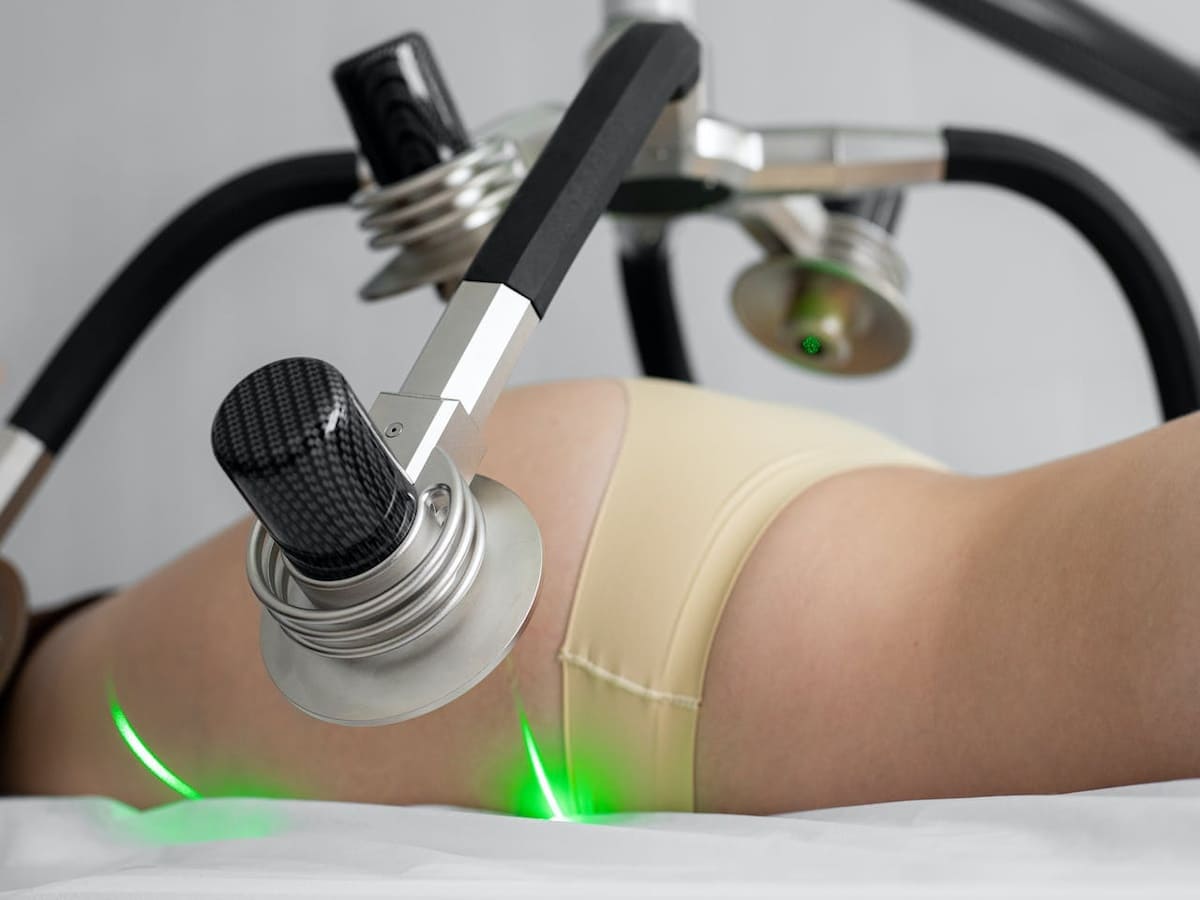
Forskningen om laserterapi visar att lågenergilaser har stöd för ett fåtal användningar, främst att förebygga oral mukosit vid cancerbehandling och att lindra långvarig nacksmärta och knäartros, medan stödet för de flesta andra användningar är svagt eller motstridigt. Resultaten beror i hög grad på dosen. Studier med för låg eller för hög dos visar ofta ingen effekt. Därför behöver du läsa varje studie med blicken på våglängd, energi per punkt och antal behandlingar.
Vad säger forskningen om laserterapi i dag?
Lågenergilaser, som i dag kallas fotobiomodulering (PBM), har studerats sedan slutet av 1960-talet. Under 2000- och 2010-talen kom flera systematiska översikter och meta-analyser som gav fältet en tydligare bild. Bilden är splittrad. Vissa användningar har stöd i internationella riktlinjer och svenska myndighetsrapporter. Andra användningar marknadsförs brett men saknar övertygande studier.
Starkast stöd finns vid oral mukosit, de smärtsamma sår i munslemhinnan som många får av strålning och cytostatika. Den internationella organisationen MASCC/ISOO rekommenderar sedan 2019 fotobiomodulering för att förebygga oral mukosit hos vuxna som genomgår stamcellstransplantation eller strålbehandling mot huvud och hals. Riktlinjen från 2020 anger evidensnivå I för två av de tre patientgrupperna.
Smärta i rörelseorganen är det andra stora området. En meta-analys i The Lancet 2009 och en svensk SBU-rapport från 2014 talar för en måttlig smärtlindring vid långvarig nacksmärta. En meta-analys i BMJ Open 2019 visar liknande resultat vid knäartros, men bara när doserna följer rekommendationerna från World Association for Photobiomodulation Therapy (WALT).
Vilka användningar har starkast och svagast stöd?
| Användning | Bedömning | Nyckelkälla |
|---|---|---|
| Förebygga oral mukosit | Rekommenderas i internationell riktlinje | MASCC/ISOO 2019 och 2020 |
| Långvarig nacksmärta | Måttlig effekt, begränsat underlag | Chow 2009, SBU 2014 |
| Knäartros | Effekt vid rekommenderad dos | Stausholm 2019 |
| Senproblem (tendinopati) | Möjlig effekt vid rätt dos | Tumilty 2010 |
| Ländryggssmärta | Otillräckligt underlag | Cochrane 2008 |
| Käkledsbesvär (TMD) | Motstridiga resultat | Petrucci 2011, Chen 2015 |
| Lymfödem efter bröstcancer | Motstridiga resultat | BMC Cancer 2022, Hussein 2024 |
| Tinnitus | Ingen säker effekt mot placebo | Chen 2020 |
Hur starkt är stödet för laser vid nacksmärta och artros?
Roberta Chow, Mark Johnson, Rodrigo Lopes-Martins och Jan Magnus Bjordal publicerade 2009 en meta-analys av 16 randomiserade studier med 820 patienter. Laserbehandling gav vid akut nacksmärta en relativ risk för förbättring på 1,69 jämfört med placebo. Vid kronisk nacksmärta var den relativa risken 4,05. Smärtan på en 100 millimeter lång skala (VAS) minskade i genomsnitt med 19,86 mm direkt efter behandlingen och med 22,07 mm vid uppföljning upp till 22 veckor. Biverkningarna var milda och lika vanliga som med placebo.
Statens beredning för medicinsk och social utvärdering (SBU) granskade samma fråga 2014. SBU bedömde i sin rapport om laserbehandling vid nacksmärta att lågeffektlaser vid långvarig nacksmärta kan ge smärtlindring i 2-6 månader efter avslutad behandling. Det vetenskapliga underlaget klassades som begränsat. För akut nacksmärta var underlaget otillräckligt.
Knäartros är den diagnos där dosfrågan syns tydligast. Martin Bjørn Stausholm och kollegor sammanställde 2019 22 placebokontrollerade studier med 1 063 deltagare. Alla doser sammantaget minskade smärtan med 14,23 mm på VAS. Med doser enligt WALT blev minskningen 18,71 mm vid behandlingens slut och 31,87 mm som högst, två till fyra veckor efter sista behandlingen. Studier med lägre doser gav bara en liten effekt som inte höll i sig.
Varför spretar resultaten i laserforskningen?
Laserstudier skiljer sig åt i våglängd, effekt, energi per punkt, antal punkter, behandlingstid och antal behandlingar. Två studier om samma diagnos kan ha så olika parametrar att de i realiteten testar två olika behandlingar. En meta-analys som slår ihop dem riskerar att späda ut effekten av de studier som använde en verksam dos.
Michael Hamblin vid Wellman Center for Photomedicine beskrev 2016 hur fältet under lång tid uppfattades som obevisat. En tidig Cochrane-översikt om artros fann inga säkra belägg. Hamblin pekar på att olika ljuskällor och protokoll gav många negativa studier. Synen förändrades när mekanismerna blev bättre kända och när forskare började jämföra resultat efter dos.
Vad betyder bifasisk dosrespons?
Bifasisk dosrespons innebär att en låg dos kan stimulera vävnaden medan en hög dos ger ingen effekt eller hämmar. Ying-Ying Huang, Michael Hamblin och kollegor beskrev 2009 hur fenomenet ofta illustreras med den så kallade Arndt-Schulz-kurvan. För patienten betyder det att mer ljus inte är bättre. En apparat med hög effekt kan ge en sämre behandling än en svagare apparat om dosen hamnar fel.
Hur mycket ljus behövs vid laserbehandling?
Dosen anges oftast i joule per behandlingspunkt eller joule per kvadratcentimeter. WALT har publicerat doseringstabeller för två vanliga våglängdsområden, 780-860 nm och 904 nm. Stausholm och medförfattare återger rekommendationen för knäleden som 4-8 joule per punkt vid 785-860 nm och 1-3 joule per punkt vid 904 nm.
Vid oral mukosit är parametrarna mer detaljerade. MASCC/ISOO-riktlinjen från 2019 listar fem protokoll med våglängder mellan 632,8 och 660 nm och energitätheter mellan 1,0 och 6,2 joule per kvadratcentimeter. Riktlinjen betonar att alla parametrar i ett protokoll ska följas och inte blandas med parametrar från ett annat protokoll.
SBU gick igenom vilka våglängder nackstudierna använde. Studierna använde 632, 830, 904, 905 och 1064 nm med lasrar på 5-500 mW i laserklass 3B. Våglängder på 904 nm eller längre gav cirka 27 mm smärtminskning på VAS, kortare våglängder cirka 13 mm. Behandlingsserierna omfattade 5-15 behandlingar under ungefär två till sju veckor.
Vad visar forskningen om senor, lymfödem och käkleder?
Senproblem är ett av de områden där dosen tidigt pekades ut som avgörande för resultatet. Steve Tumilty och medförfattare, bland dem Jeffrey Basford vid Mayo Clinic, gick 2010 igenom kontrollerade studier av laser vid tendinopati. Vid besvär i hälsenan minskade smärtan med 13,6 mm på VAS. Författarna skrev att laser potentiellt kan vara effektivt när rekommenderade doser används. Tolv positiva studier stödde sambandet mellan gott resultat och dos enligt rekommendationerna.
Lymfödem efter bröstcancer ger en mer splittrad bild. En systematisk översikt i BMC Cancer 2022 omfattade åtta kliniska studier och fann minskad armomkrets och armvolym, men ingen skillnad i axelrörlighet och smärta. Hussein och kollegor kom 2024 fram till nästan det omvända. Deras meta-analys av elva studier med 379 patienter visade ingen signifikant skillnad i armomkrets eller armvolym, men förbättrad smärta och axelrörlighet.
Käkledsbesvär (TMD) är ett tredje exempel på oenighet. Petrucci och medförfattare fann 2011 i sex randomiserade studier inget stöd för att laser fungerar vid TMD. Chen och kollegor slog 2015 ihop 14 studier med 454 patienter och fann ingen säker smärtminskning jämfört med placebo, men bättre gapförmåga och rörlighet i käken.
Hårväxt vid ärftligt håravfall är ett område där kommersiella apparater kom före den oberoende forskningen. FDA godkände HairMax LaserComb för försäljning i januari 2007. Senare granskningar visar ökad hårtäthet jämfört med placebo i flera studier. Granskarna påpekar att många studier är små och sponsrade av tillverkarna.
Hur läser du en studie om laserterapi?
En studie om laserterapi blir begriplig först när du vet exakt vad som gjordes. Fem frågor räcker långt för att bedöma om resultatet är trovärdigt och om det går att jämföra med andra studier.
- Var studien placebokontrollerad? En avstängd laser som ser ut och låter likadant är standard. Utan placebogrupp går det inte att skilja effekten från förväntan.
- Var patient och bedömare blindade? Laserljus i nära infrarött är osynligt. Det gör blindning möjlig, men bara om apparaten inte avslöjar vilken grupp patienten tillhör.
- Vilken dos användes? Leta efter våglängd, effekt i milliwatt, tid per punkt och joule per punkt. Saknas uppgifterna går studien inte att upprepa.
- Hur många deltagare fanns? Många laserstudier har färre än 50 deltagare. Små studier ger osäkra resultat i båda riktningar.
- Vem finansierade studien? Inom hårväxt har en granskning i Actas Dermo-Sifiliográficas 2021 påpekat att många studier är sponsrade av tillverkare.
Vi har fler artiklar om hur störfaktorer och placebo påverkar resultaten. Sidan om störfaktorer i laserstudier och sidan om kritiken mot kritikerna fördjupar frågorna.
Vilken kritik finns mot laserforskningen?
Kritiken riktar sig mot tre saker: små studier, bristande blindning och påståenden som går långt utöver underlaget. Cochrane-översikten om ländryggssmärta från 2008 omfattade sju randomiserade studier med 384 personer och fann att underlaget var för litet och för spretigt för säkra slutsatser. Jan Tunér, tandläkare och en av fältets mest aktiva skribenter, skrev 2014 att bara ett fåtal av över 100 beskrivna dentala indikationer har tillräckligt stöd för att räknas som evidensbaserade.
Tinnitus visar hur marknadsföring och forskning kan gå isär. Chen och kollegor slog 2020 ihop elva studier med 670 patienter och fann ingen säker skillnad mot placebo. Patientorganisationen Tinnitus UK bedömer metoden som ineffektiv. Läs mer på sidan om fusk och vilseledande påståenden inom laserforskning.
Försvararna av metoden pekar på dosen. Om en stor andel av de negativa studierna använde för låga doser blir den samlade bilden missvisande. Stausholms artrosanalys från 2019 är det tydligaste exemplet på den invändningen, eftersom effekten där försvann i studierna med låga doser.
Hur fungerar lågenergilaser i cellerna?
Den mest accepterade förklaringen är att rött och nära infrarött ljus absorberas av enzymet cytokrom c-oxidas i mitokondriernas andningskedja. Ljuset tros lossa kväveoxid som hämmar enzymet. Cellandningen ökar då och cellen bildar mer energi i form av ATP. Forskaren Tiina Karu identifierade enzymet som en primär fotoacceptor och beskrev hur signaler går vidare från mitokondrien till resten av cellen.
Karus grupp visade 2004 att cellers förmåga att fästa vid en yta ökade efter bestrålning, med toppar vid ungefär 620, 680, 760 och 820 nm. Topparna stämmer väl med de våglängder som används kliniskt. Mer om hur djupt ljuset når finns på sidan om ljusets inträngning i vävnaden.
Vad var LaserWorlds gästledare?
Under åren 2000-2006 publicerades en serie gästledare, Guest Editorials, i LaserWorld på adressen laser.nu. LaserWorld var knuten till Jan Tunér och Lars Hode. Tunér grundade Swedish Laser-Medical Society 1989. Serien omfattade 13 numrerade texter. Varje ledare var skriven av en inbjuden forskare eller kliniker och tog upp en aktuell fråga inom laserterapin.
Ämnena speglar vad fältet diskuterade kring millennieskiftet. Flera texter rörde metodfrågor: hur Cochrane-analyserna av laserterapi kunde förbättras och om drygt 100 positiva dubbelblinda studier räckte som bevis. Jan Magnus Bjordals litteraturöversikt om effektiva doser för vävnadsläkning presenterades. Chukuka Enwemeka skrev om laserns roll vid vävnadsläkning och idrottsskador. K.O. Greulich tog upp frågan om lågenergilaser kan skada arvsmassan.
Andra ledare beskrev kliniska försök och konferenser. En text återgav en placebokontrollerad pilotstudie från Wolfson Medical Center i Israel där Yacobi och Sidi testade laser på 808 nm vid erektil dysfunktion hos 44 deltagare. Pilotstudien har vi inte kunnat hitta publicerad i en vetenskaplig tidskrift. En annan ledare rapporterade från WALT-konferensen i Tokyo 2002. Ytterligare ett ämne var laser vid bihåleinflammation (sinuit).
Gästledarna är i dag ett tidsdokument. De visar en period när forskarna själva publicerade och debatterade på webben innan de stora meta-analyserna fanns. Texterna återges inte här. Enwemekas meta-analys om vävnadsläkning och smärta publicerades 2004 i Photomedicine and Laser Surgery och fann stora effektstorlekar. Senare översikter med strängare kvalitetskrav har gett mer försiktiga resultat.
Vad rekommenderar svenska myndigheter om laserterapi 2026?
SBU:s rapport om nacksmärta från 2014 är den mest omfattande svenska granskningen av lågenergilaser. SBU besvarade 2018 två frågor om laser i tandvården och om laser vid oral mukosit. I båda svaren sammanställde SBU vad studieförfattarna kom fram till utan att själv ta ställning i sakfrågan.
Strålsäkerhetsmyndighetens föreskrifter SSMFS 2014:4 styr säkerheten. Behandling av ögon eller området inom två centimeter från ögat med laser i klass 3B eller 4 får bara ske under ansvar av legitimerad läkare. Medicinsk behandling med laser i klass 4 kräver ansvar av legitimerad läkare eller tandläkare. De flesta lågenergilasrar hör till klass 3B. Mer om ögonrisker finns på sidan kan laser göra dig blind.
Internationellt har den amerikanska läkemedelsmyndigheten FDA godkänt flera apparater för försäljning genom förfarandet 510(k). HairMax LaserComb godkändes för hårväxt hos män i januari 2007. Ett 510(k)-godkännande innebär att apparaten liknar en redan godkänd produkt och betyder inte att effekten är bevisad i nivå med ett läkemedel.
Vart är forskningen på väg?
Namnbytet till fotobiomodulering 2015 markerar en förskjutning. Forskarna betonar att effekten kommer från ljusets våglängd och dos och inte från lasertekniken som sådan. Lysdioder med motsvarande parametrar verkar ge jämförbara resultat. MASCC/ISOO-riktlinjen för mukosit från 2020 pekar ut barn och behandling av redan etablerad mukosit som områden där mer forskning behövs.
Större studier med standardiserade och väl redovisade doser är det som efterfrågas i nästan varje översikt. Utan sådana studier kommer resultaten fortsätta att spreta. Vi följer forskningen och uppdaterar sidan när nya översikter publiceras.
Vanliga frågor om forskningen om laserterapi
Är laserterapi vetenskapligt bevisad?
Lågenergilaser har vetenskapligt stöd för några användningar, främst att förebygga oral mukosit vid cancerbehandling. Vid långvarig nacksmärta och knäartros visar meta-analyser måttlig smärtlindring. För många andra användningar är stödet svagt.
Varför visar vissa laserstudier ingen effekt?
En vanlig förklaring är fel dos. Vid knäartros gav doser under WALT:s rekommendationer bara en liten effekt som inte höll i sig.
Vad är WALT?
WALT är World Association for Photobiomodulation Therapy, ett internationellt förbund för laserterapi. Förbundet bildades i Barcelona 1994 och har publicerat doseringstabeller för lågenergilaser.
Vad kom SBU fram till om laser vid nacksmärta?
SBU bedömde 2014 att lågeffektlaser kan ge smärtlindring i 2-6 månader vid långvarig nacksmärta. Underlaget klassades som begränsat.
Vad är bifasisk dosrespons?
Bifasisk dosrespons innebär att en låg ljusdos kan stimulera vävnaden medan en för hög dos ger sämre eller ingen effekt. Fenomenet beskrivs ofta med Arndt-Schulz-kurvan.
Hjälper laser mot ländryggssmärta?
Cochrane fann 2008 att underlaget var otillräckligt för säkra slutsatser. Översikten omfattade sju studier med 384 personer.
Vad var LaserWorlds gästledare?
Gästledarna var en serie på 13 texter av inbjudna forskare som publicerades på laser.nu 2000-2006. Ämnena omfattade dosfrågor, Cochrane-analyser, DNA-skador och kliniska pilotstudier.
Fungerar lysdioder lika bra som laser?
Forskningen tyder på att lysdioder med samma våglängd och dos ger jämförbar effekt. Därför används i dag det bredare namnet fotobiomodulering.
Läs vidare på Laser.nu
- Lågenergilaser: guide till LLLT och fotobiomodulering
- Laser i tandvården
- Endre Mester och upptäckten av laserns läkande effekt
- Swedish Laser Medical Society
- Laser mot tinnitus
- Pionjärerna inom laserterapi
- Störfaktorer i laserstudier
- Fusk och vilseledande påståenden
Källor
- Chow RT, Johnson MI, Lopes-Martins RA, Bjordal JM. Efficacy of low-level laser therapy in the management of neck pain. Lancet 2009;374:1897-1908
- SBU. Laserbehandling vid nacksmärta. SBU Alert 2014-03
- Stausholm MB m.fl. Efficacy of low-level laser therapy on pain and disability in knee osteoarthritis. BMJ Open 2019;9:e031142
- Tumilty S m.fl. Low level laser treatment of tendinopathy. Photomed Laser Surg 2010;28(1):3-16
- Clinical application of low-level laser therapy in the management of breast cancer-related lymphedema: a systematic review. BMC Cancer 2022
- Hussein HM m.fl. Impact of low-level laser therapy on upper limb lymphoedema secondary to breast cancer. Arch Med Sci 2024
- Petrucci A m.fl. Effectiveness of low-level laser therapy in temporomandibular disorders. J Orofac Pain 2011;25(4):298-307
- Chen J m.fl. Efficacy of low-level laser therapy in the treatment of TMDs: a meta-analysis of 14 randomised controlled trials. J Oral Rehabil 2015
- Yousefi-Nooraie R m.fl. Low level laser therapy for nonspecific low-back pain. Cochrane 2008
- Zadik Y m.fl. Systematic review of photobiomodulation for the management of oral mucositis. Support Care Cancer 2019
- Elad S m.fl. MASCC/ISOO clinical practice guidelines for the management of mucositis. Cancer 2020;126(19):4423-4431
- Huang YY, Chen AC, Carroll JD, Hamblin MR. Biphasic dose response in low level light therapy. Dose-Response 2009;7
- Hamblin MR. Photobiomodulation or low-level laser therapy. J Biophotonics 2016;9:1122-1124
- Karu TI, Pyatibrat LV, Kalendo GS. Photobiological modulation of cell attachment via cytochrome c oxidase. Photochem Photobiol Sci 2004;3:211-216
- Chen CH m.fl. Efficacy of low-level laser therapy for tinnitus. Brain Sci 2020;10(12):931
- Enwemeka CS m.fl. The efficacy of low-power lasers in tissue repair and pain control. Photomed Laser Surg 2004;22(4):323-329
- Tunér J. Dental laser phototherapy. Photomed Laser Surg 2014;32(6):313-314
- Martínez-Pizarro S. Low-level laser therapy for androgenetic alopecia. Actas Dermosifiliogr 2021;112:99-102
- WALT. Dosage recommendations
- WALT 2012 Congress Program Book
- Strålsäkerhetsmyndigheten. SSMFS 2014:4, konsoliderad version
- FDA. 510(k) K060305 HairMax LaserComb
Källorna kontrollerades 13 oktober 2026.